REVIEW · NICOSIA
Nicosia: Last Divided City, Tour combining South & North
Book on Viator →Operated by Eleni Ellinas · Bookable on Viator
Two cities share one old map here. This small-group walk through Lefkosia’s major landmarks helps you understand how power, faith, and trade changed the streets you see today. I especially like that the stops are real, central buildings you can’t properly appreciate from a bus ride, and the guide brings the story down to human scale.
You’ll also get a clear, English-language explanation of what you’re looking at, plus a guide who blends professional teaching with personal local perspective. The only drawback to plan around: the route depends on good weather, and you’ll be walking and standing for a couple of hours.
In This Review
- Key things to know before you go
- Why Nicosia Feels Like Two Cities on One Map
- Price and time: value at $83.08
- Start at Markou Drakou, end near Ledra Street checkpoint
- Büyük Han: the Ottoman caravanserai that became an arts hub
- Selimiye Camii: a cathedral-mosque that explains centuries of rule
- Venetian walls and the Kyrenia Gate: how the city learned to defend itself
- Kumarcılar Han, also called the Gambler’s Inn
- Bedesten and Eski Ayanikola Kilisesi: one building, many roles
- The guide makes the difference: Eleni Ellinas’s approach
- Who this tour fits best
- A few tips so you get more from your 2–3 hours
- Should you book Last Divided City: South & North?
- FAQ
- How long is the Last Divided City tour?
- What does the tour cost?
- Is the tour offered in English?
- How big is the group?
- Where does the tour start and end?
- Do you get a mobile ticket?
- Is there admission charged at the stops?
- Can I bring a service animal?
- What happens if the weather is bad?
- Is free cancellation available?
Key things to know before you go
- Small group (max 10) means more time for questions and a calmer pace.
- Six major stops take you from Ottoman caravanserais to the Selimiye Mosque and the Venetian fortifications.
- Free admission listed for each site on the route keeps your budget predictable.
- Finish at Ledra Street checkpoint, handy if you want to continue on your own afterward.
- Eleni Ellinas is the named guide, and the common theme in her reviews is clarity plus personal, local context.
Why Nicosia Feels Like Two Cities on One Map
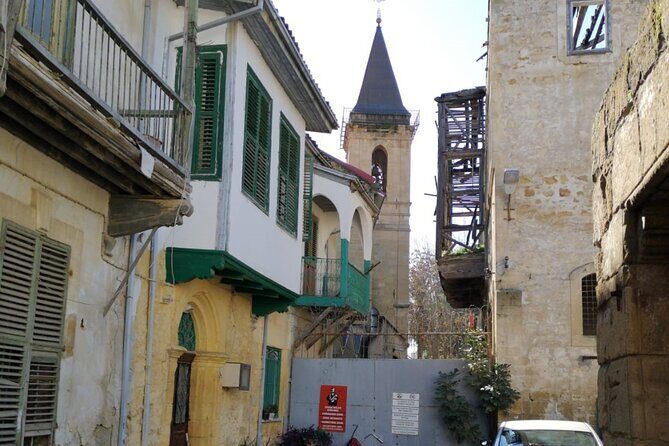
Nicosia’s story isn’t stuck in a museum. Even if you’ve never studied Cyprus politics, the buildings explain it fast. You’re walking through a city that was fortified, re-fortified, and repurposed again and again—so the street corners feel like chapters, not just sightseeing.
What makes this tour especially interesting is the mix of Ottoman and Venetian sites in a compact route, plus the ending point near Ledra Street. You start in North Lefkosia’s old-city core, then move through key landmarks that show how different empires shaped what still stands. It’s a smart way to get bearings without treating the Green Line area like a separate theme park.
You can also read our reviews of more city tours in Nicosia
Price and time: value at $83.08
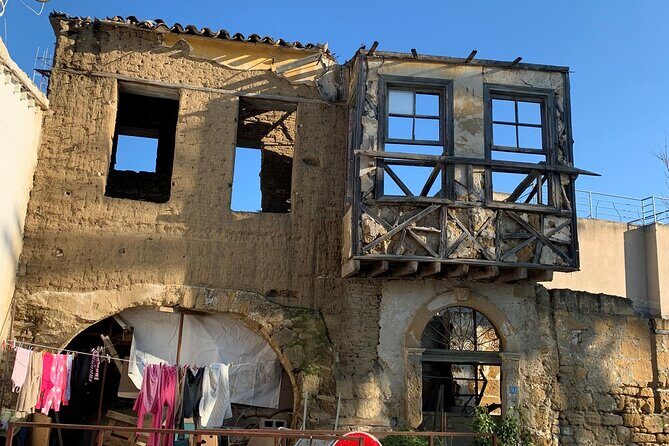
At $83.08 per person for about 2 to 3 hours, you’re paying for guided orientation and access to multiple major sites in one go. The value is even better because admission is listed as free for every stop on the route, so you’re not stacking extra ticket costs.
Also, the schedule is built for efficiency. You get a sequence of architectural highlights—caravanserais, a monumental church-turned-mosque, and the wall-and-gate system—without feeling like you have to study a map for each jump. If you only have a short window in Nicosia, this is the kind of structured walk that saves time and prevents that overwhelmed, I-hope-I’m-going-the-right-way feeling.
Start at Markou Drakou, end near Ledra Street checkpoint

The tour starts at Markou Drakou, Agios Dometios 2369, Cyprus and finishes at Ledra Street checkpoint. That matters because it anchors the day: you know where you begin (outside the busiest old streets) and where you end (a major reference point in the city center).
A few other practical notes from the tour details:
- You get a mobile ticket.
- It’s offered in English.
- The group is capped at 10 travelers, which helps the guide pace the conversation around your questions.
- Service animals are allowed, and the tour is described as suitable for most travelers.
- It’s listed as near public transportation, so you’re not locked into hiring a taxi for the entire outing.
One planning consideration: the tour requires good weather. If conditions are poor, you may be offered a different date or a full refund. So if you’re booking close to travel day, keep a flexible mindset.
Büyük Han: the Ottoman caravanserai that became an arts hub
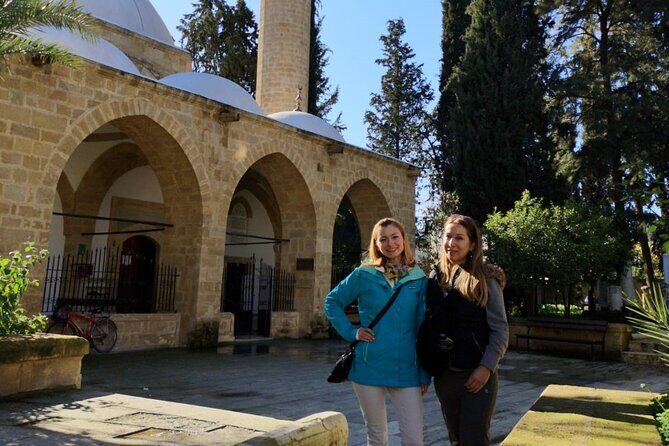
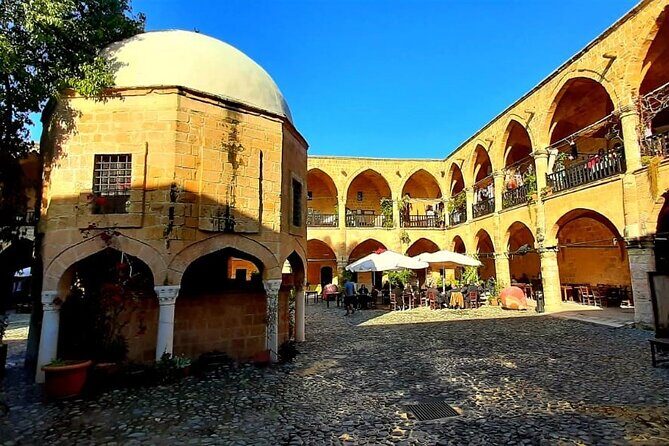
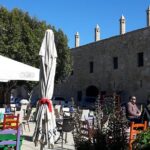
Your first stop is Buyuk Han, one of the best-preserved Ottoman caravanserai buildings in Cyprus. A caravanserai was basically the travel system of its era: a covered place where merchants and travelers could stay, regroup, and keep moving. You’ll see why these buildings were so important to older trade routes across the island and toward Anatolia.
Today, Büyük Han has been revived as an active arts center with galleries and workshops, and it’s also used for cultural events like folklore dance shows, piano recitals, and drama displays. That combination is part of what I love about it: you’re not just looking at a restored shell. You’re seeing how the function of the building shifted from lodging and commerce to creativity and public life.
A small reality check: because it’s an arts venue, the focus can change depending on what’s happening inside. If you’re visiting for architecture and story, this stop still delivers, but you might notice the atmosphere depends on the day.
Selimiye Camii: a cathedral-mosque that explains centuries of rule
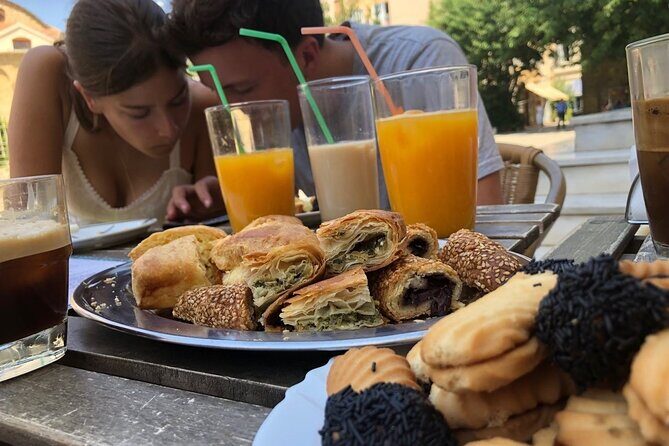
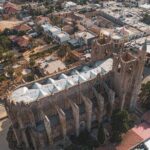
Next you’ll explore Selimiye Camii, the city’s standout landmark in Lefkoşa. This is one of those places where the walls tell the biography. The site is associated with a long timeline: sources link its origins to the 13th century, and it’s historically known as the Cathedral of Saint Sophia, later converted into a mosque.
The building’s style is described as a cross between French Gothic church design and mosque architecture. That blend is exactly why it’s worth stopping even if you’ve seen other major religious sites in Europe. It’s not just about faith; it’s about what rulers decided to keep, modify, and claim.
Practical note: the stop is short, so it’s a “see and orient” moment more than a slow museum visit. If you want deeper answers, this is where the small-group format really helps—ask the guide what to look for first before your attention gets pulled in five directions.
Venetian walls and the Kyrenia Gate: how the city learned to defend itself
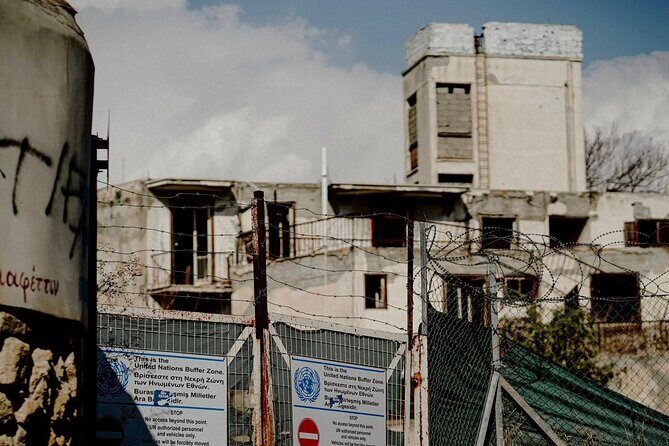
The middle of the walk turns to the defensive geography of old Nicosia. You’ll see the Medieval Venetian Walls, which form a boundary around the old city. The design is so distinctive that you’ll likely remember it later when you see a map—it’s one of those structural fingerprints that instantly changes how you imagine the city.
Then you’ll move to Kyrenia Gate, one of the three gates in the Venetian wall ring. For over a thousand years, Lefkosia was a walled city, passing from Lusignans to Ottomans. The Venetians rebuilt the walls during the Renaissance era because an Ottoman threat was looming. Standing near these gates, you start to grasp how fortifications aren’t just military objects; they shape daily movement, commerce, and where people build next.
If you’re the type who likes to connect architecture to cause and effect, this segment will click. The drawback is simple: wall viewing is visual and interpretive, not hands-on. If you prefer interactive experiences, you’ll rely on the guide’s explanation to make the stones feel personal.
Kumarcılar Han, also called the Gambler’s Inn

After the walls, the tour heads to Kumarcılar Han, sometimes called the Gambler’s Inn. It’s a smaller, more modest Ottoman inner-city commercial inn compared with Büyük Han, but it still has that key caravanserai logic: a carved entry, protected interiors, and a layout built for travelers and trade.
The entrance gate is especially interesting. It’s described as a monumental carved gate that may date to before the Ottoman conquest, and experts believe the structure could stand on an earlier building, possibly even the ruins of a monastery. In other words, this isn’t a single-era monument. It’s a layered site, where the later building is literally built over earlier meaning.
Today it’s fully restored and used with arts and craft shops, so you can look at the building and then browse in the same place. The time is limited here, so I’d treat it as a quick look plus a chance to pick up a small handmade item if something catches your eye.
Bedesten and Eski Ayanikola Kilisesi: one building, many roles
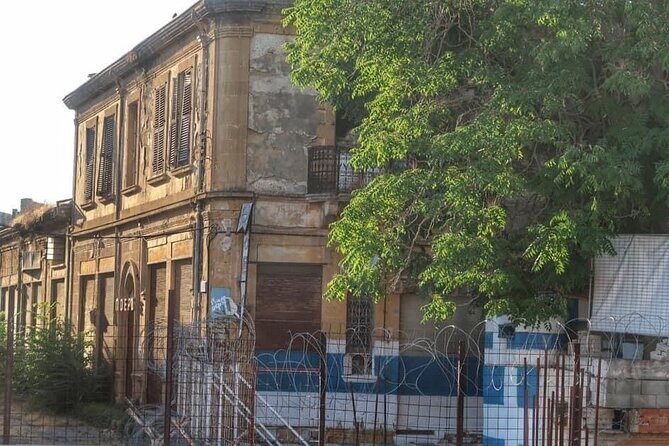
The final major stop is Bedesten – Eski Ayanikola Kilisesi. This one can feel like a time machine because the building’s purpose kept changing. You’ll walk around Bedesten, described as one of Lefkoşa’s most important historical structures and a reflection of the city’s multicultural past.
The story goes back more than a thousand years: originally built as a church around the 6th century, expanded and rebuilt between the 12th and 16th centuries, then converted to a covered market during Ottoman rule. That makes this stop a favorite for architecture lovers and for anyone who likes practical urban history. It shows how the same space can be used for worship, then commerce, then back again as the city’s identity shifts.
Because your time here is short, your best move is to use the guide to orient you. Ask what the key structural clues are, what parts look older, and how the building’s function changed. The tour is paced for understanding, not for lingering indefinitely, so let the guide’s explanation do the heavy lifting.
The guide makes the difference: Eleni Ellinas’s approach
This is where the tour earns its perfect score. The named guide is Eleni Ellinas, and the reviews point again and again to a specific style: she’s professional and experienced, she answers questions clearly, and she makes the complex story of a divided city feel human.
One theme shows up strongly: the tour is described as not easy to lead because it carries emotional and historical weight. That matters to you because it affects pacing and tone. In practice, it means the information isn’t dumped like facts from a textbook. Instead, it’s presented with empathy and context—exactly what you want in a place where “history” is also present-day reality.
Another strong element is personal local insight. Reviews mention that she adds family and lived-experience context, plus practical tips like where to buy spices, where to get coffee, and suggestions for a Cypriot lunch. Even if you don’t follow those exact recommendations, the point is that you’ll leave with ideas for how to keep experiencing the city in a more local way.
Who this tour fits best
I think this walk is a great match if you want:
- A structured first-time orientation to Nicosia’s North Lefkosia old-city core
- An easy way to connect Ottoman caravanserais, Venetian fortifications, and a major landmark religious building
- A guide-led explanation that turns confusing history into clear street-level understanding
You might find it less ideal if you want a slow, sit-and-stare photography tour. The route is efficient, and each stop is relatively short. Think of it as an interpretive stroll with key stops, not a long deep study.
A few tips so you get more from your 2–3 hours
Since the tour moves from site to site with brief stop times, your goal is to arrive ready to look. I suggest you:
- Wear comfortable shoes. Old entrances and stone surfaces can be uneven.
- Bring a phone or small notebook for questions. The guide’s explanations sound best when you can follow up right away.
- Go with curiosity. This city is political, architectural, and personal all at once, and the tour works best when you let the connections build.
Also, because it ends at Ledra Street checkpoint, you’ll likely want to plan a flexible next step. If you’re continuing elsewhere on foot or by transit, finishing near a major reference point makes that easier.
Should you book Last Divided City: South & North?
If you have limited time in Nicosia and you want the city’s big story explained through the buildings, I’d book it. The route stacks high-impact landmarks—Büyük Han, Selimiye Camii, Venetian walls, Kyrenia Gate, Kumarcılar Han, and Bedesten/Eski Ayanikola—with free admission listed for each stop, and a small-group size that keeps the experience from feeling rushed.
I’d especially recommend it if you appreciate guides who can handle sensitive history with care and still make it clear. That’s the consistent standout here, and it’s exactly what turns a walk through impressive architecture into real understanding.
FAQ
How long is the Last Divided City tour?
It runs for about 2 to 3 hours.
What does the tour cost?
The price is $83.08 per person.
Is the tour offered in English?
Yes, the tour is offered in English.
How big is the group?
The tour has a maximum of 10 travelers.
Where does the tour start and end?
It starts at Markou Drakou, Agios Dometios 2369, Cyprus, and ends at Ledra street checkpoint, Ledras 68, Nicosia 1010, Cyprus.
Do you get a mobile ticket?
Yes, it uses a mobile ticket.
Is there admission charged at the stops?
Admission tickets are listed as free for the stops included on the route.
Can I bring a service animal?
Yes, service animals are allowed.
What happens if the weather is bad?
The tour requires good weather. If it’s canceled due to poor weather, you’ll be offered a different date or a full refund.
Is free cancellation available?
Free cancellation is available up to 24 hours in advance for a full refund.