REVIEW · AYIA NAPA
Ghost-Town Famagusta Mini Bus Tour from Protaras and Ayia Napa
Book on Viator →Operated by Trackers Excursions, Cyprus · Bookable on Viator
Barbed wire has a way of sticking. This mini bus outing takes you into Famagusta’s abandoned lanes and walled city, with a guide who connects the sights to what happened after 1974. You start with a short film in Derynia, then get a rooftop look across the border before moving on to the ruins and empty hotel-lined coast.
What I loved most was the combination of small-group pacing and real, personal storytelling from guides like George, Atos/Athos, and Olga. I also liked the practical value: hotel pickup and drop-off are included, and there are no add-on fees for fuel, parking, or sightseeing.
One thing to plan for: you need a valid passport for border control, and not all passport nationalities are accepted for crossing (Armenian, Nigerian, and Serbian passport holders are not accepted). Also, this is an emotionally heavy place, and you should expect some walking.
In This Review
- Key things that make this tour worth your time
- A ghost town you can see, not just read about
- Price and what you’re really paying for
- Pickup from Protaras, Pernera, Kapparis, and Ayia Napa
- Stop 1: Derynia Heritage Center film and rooftop border viewpoint
- Stop 2: Walled City views, moat walk, and the 365 churches
- Stop 3: The ghost-town hotel streets and Golden Sand shoreline
- The guides: humor, firsthand stories, and how to get the most out of the narration
- What’s included vs. what you’ll need to cover yourself
- Who this tour is best for
- Should you book this Ghost-Town Famagusta mini bus tour?
- FAQ
- How long is the Ghost-Town Famagusta mini bus tour?
- How much does the tour cost?
- Is hotel pickup and drop-off included?
- Where does pickup happen?
- What are the approximate pickup times?
- What language is the tour offered in?
- Do I need a passport?
- Are all passport holders accepted to cross the border?
- Are refreshments or meals included?
- What’s the maximum group size?
- FAQ: What if the weather is bad?
Key things that make this tour worth your time
- Rooftop viewpoint after a film in Derynia: You watch a short movie about Famagusta before the invasion, then look across the border with binoculars.
- Fence-side drive and an up-close view of the deserted hotel coastline: You get the scale fast, not hours later.
- Inside-the-walls experience in the gothic city: You circle the moat, enter the city within the walls, and hear about the 365 churches and cathedrals.
- Free time that’s actually useful: Time to walk, sit for coffee, and explore beyond the bus commentary.
- A guided ghost-town stroll toward Golden Sand: A shorter, focused walk through abandoned streets and shopfronts.
- A maximum group size of 16: You’re more likely to hear details clearly and ask questions.
A ghost town you can see, not just read about
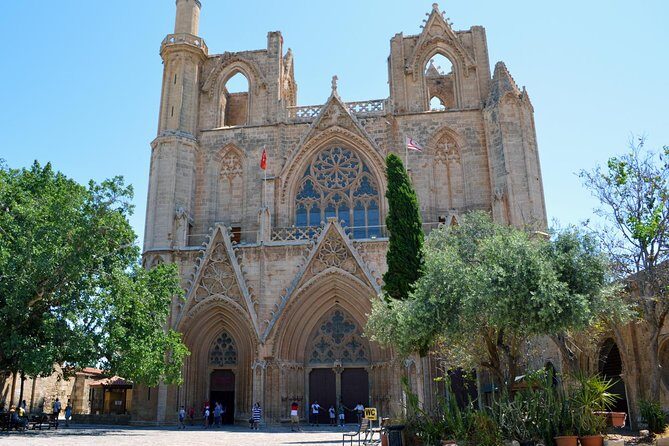
Famagusta is one of those rare travel stops where your brain has to work overtime. You arrive expecting “ruins,” but what you get is a city that still feels lived-in—just frozen in time. The route is designed so you get the story in layers: first the big picture from viewpoints, then the walled-city interior, and finally a walk through the abandoned hotel streets down toward Golden Sand.
The emotion here is the point. You’ll hear how families, landmarks, and daily life were affected, and you’ll see the physical remnants—empty hotels, abandoned streets, and the stark border setting around the area. A few guides on this tour are known for adding firsthand context and keeping the mood human (with humor at the right moments), which can make the history easier to follow even when it’s hard to absorb.
This is also a short day, not a full marathon. With an approximate 4 hours 30 minutes runtime, you can fit it between the beaches of Protaras/Ayia Napa and other Cyprus plans. It’s a good way to say you saw Varosha/Famagusta’s ghost-town reality without sacrificing your whole day to transportation.
You can also read our reviews of more tours and experiences in Ayia Napa.
Price and what you’re really paying for
The price is $60.49 per person for the mini bus tour. On paper, that can sound like “just a bus to a place.” In practice, you’re paying for three things:
- Hotel pickup and drop-off in the approved areas (you’re not self-navigating through checkpoints).
- A driver/guide who manages the flow and helps you understand what you’re looking at.
- Admission costs are handled for the scheduled paid segment—then you move through the rest of the experience with free admission time at the walled city and ghost-town segments.
What’s not included is simple: refreshments and food/drinks aren’t part of the price. That means you should budget for coffee and any snacks if you get thirsty during walking time. One smart move is to bring water, especially if you’re going in warm months.
Also keep this in mind: the tour runs early, and you’ll spend real time on your feet. If you’re traveling to Cyprus for laid-back beach days, you’ll likely still enjoy this—but you’ll want comfy shoes and a “slow down and take it in” mindset.
Pickup from Protaras, Pernera, Kapparis, and Ayia Napa
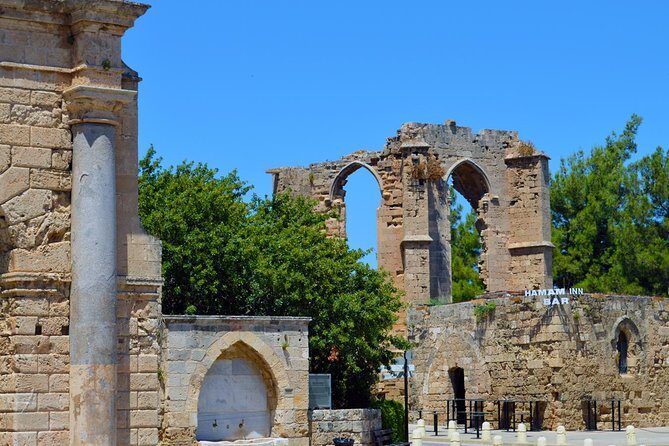
This one matters for convenience. Pickup is only offered from Kapparis, Pernera, Protaras, and Ayia Napa areas. If you’re staying outside those zones, you’ll need to coordinate how you’ll get to the pickup area.
Expect early starts:
- Kappari, Pernera & Protaras: 7:45am–8:00am
- Ayia Napa: 8:15am–8:30am
You’ll also get hotel drop-off back at the end of the activity (the tour ends back at the meeting/pickup point). The tour uses a mobile ticket, and confirmation is received at booking time.
Small tip: plan to be ready before the pickup window. A couple of guide experiences in the feedback highlighted how timing questions can happen—so it’s worth being waiting-ready rather than assuming the van will circle again.
Stop 1: Derynia Heritage Center film and rooftop border viewpoint
Your first stop is at the Cultural & Heritage Center in Derynia. You start with a short film that shows Famagusta before the invasion. It’s brief, but it sets the emotional and historical frame so the later empty streets don’t feel random.
Then you move up to a rooftop viewpoint. From there, you can look over the border at Famagusta with binoculars provided. This is the spot for “oh wow” moments—because you see the geography and scale right away, not just from street level.
There’s also a practical window here: you can have coffee or buy refreshments inside the center. The scheduled time is about 20 minutes, and the admission ticket for this portion is included.
Potential drawback? This stop can feel a bit “introductory” if you already know the history. Still, I’d treat it as setup time: it makes the rest of the tour land better when you’re already looking at the right things.
Stop 2: Walled City views, moat walk, and the 365 churches
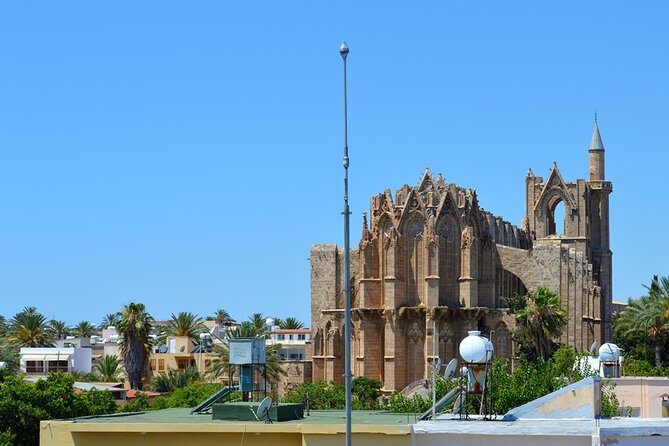
After the viewpoint, the tour shifts from seeing to understanding. You’ll start by seeing Famagusta as an abandoned ghost town, then cross the border and drive along the fence that surrounds the area. The drive is part of the experience because it shows how the city sits in a restricted, controlled landscape.
Next comes a sandy beach area where you can view deserted hotels up close along the coast. This gives you a “from here, this is what people had” sense—especially if you’ve walked beach promenades elsewhere in Cyprus.
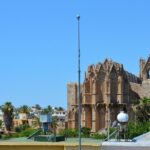
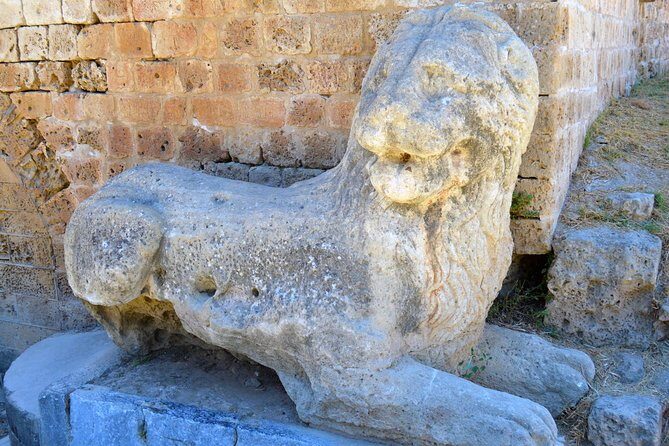
Then you circle the moat of the gothic city, with the castle walls rising over you. After that, you enter the city within the walls for a guided tour. Here’s one of the most eye-catching details: you’ll hear about the 365 churches and cathedrals that once stood in the city.
You’ll get free time afterward to explore at your own pace. The goal is to use it in a way that makes sense to you: walk slowly, take photos from the walls, or sit with coffee and local sweets. The total time scheduled here is about 2 hours, and admission is noted as free for this segment.
A practical consideration: this is where your walking adds up. The setting is historic and uneven, so you’ll want shoes you can trust for long sidewalks and stone surfaces. Also, if you’re hoping for lots of free time at the beach, manage expectations: this is more “guided architecture and city layout” than “hours of lounging.”


Stop 3: The ghost-town hotel streets and Golden Sand shoreline
The final stop is the “ghost town” experience itself. You’ll stroll through streets lined with abandoned hotels and once-prestigious properties and shopfronts, working your way toward the Golden sand shore and then back again.
This is scheduled at about 40 minutes, so it’s long enough to feel the atmosphere but short enough not to drag. What you get most here is a sense of physical abandonment: doors and facades that suggest daily routines that simply stopped.
There’s also something to notice if you like photography or “time capsule” travel. In this area, the city layout is readable, but life isn’t there to soften the edges. It can feel eerie in a way that photographs don’t fully capture.
One tip: keep your group together when you’re walking in this segment. Because it’s a restricted area, it’s easy to wander toward something that looks interesting but isn’t where you’re supposed to be. Let the guide set the pace and meeting points, then go slow on your own once you’re in the right stretch.
The guides: humor, firsthand stories, and how to get the most out of the narration
This tour’s biggest recurring strength is the guide experience. Names that come up again and again include George, Atos/Athos, Olga, and Dmitri. What they tend to have in common is that they make the history personal, not just chronological.
Some guides include firsthand perspective from people who lived through the events around 1974, which helps you connect the physical ruins to the human story. Others balance that with humor, like the guide who’s described as funny even when discussing a sad subject. That mix matters. It keeps you from drowning in facts, and it helps you follow why specific places ended up the way they did.
That said, commentary quality can vary. At least one experience notes that English communication and overall balance could be stronger. If you prefer very neutral, evenly weighted historical framing, you might want to read a basic primer on what led to the conflict before you go. You’ll still get the value of seeing the site, but you’ll be less surprised by how emotional and personal the narration can be.
One more practical point: don’t sit in the back if you’re sensitive to hearing the guide. You’ll get more out of the stories if you can clearly hear the narration during the drive and at key stops.
What’s included vs. what you’ll need to cover yourself
Here’s the clean breakdown.
Included:
- Driver/guide
- Hotel pickup and drop-off
- Local taxes
- Admission ticket for the Derynia film/rooftop viewpoint portion
- Walled city and ghost-town segments are listed as free admission within the tour flow
Not included:
- Refreshments
- Food and drinks
So bring a water bottle and plan to buy a coffee if you want one. In the walled-city portion, the tour notes free time with the option to sit for coffee and famous sweets, but you should assume that’s on you unless snacks are explicitly included.
Also, if you’re heat-sensitive, consider that some mini bus comfort can depend on the vehicle day. One piece of feedback mentioned an air-conditioning issue. If you’re traveling in warmer months, you might find it worth bringing something light to layer and settling in where air reaches you best.
Who this tour is best for
You’ll probably love this tour if you:
- Want a guided way to see Famagusta without figuring out logistics alone.
- Like history that’s tied to physical places—fence lines, walled streets, deserted hotels.
- Appreciate a small group atmosphere (max 16) so questions don’t get lost.
- Can handle a moderate amount of walking and uneven ground.
It can also work well for families, as one experience mentions a 12-year-old who enjoyed the trip. The key is whether your kids can sit through story time and walk when asked.
You might want to skip this if:
- Border-crossing rules are a dealbreaker for you.
- You prefer lighter, less emotionally intense sightseeing.
- You’re someone who really needs a tightly controlled pace. Some guides can be so passionate that the tour can run longer than expected, and the schedule may feel stretched if you’re timing another plan afterward.
Should you book this Ghost-Town Famagusta mini bus tour?
I’d book it if you want a focused, small-group day that gets you into Famagusta’s ghost-town reality with context. This isn’t a drive-by. It’s set up so you see the border-side viewpoint, the walled-city interior, and then the abandoned hotel streets toward Golden Sand—all with a guide who can make the story stick.
Before you book, do three things:
- Make sure your passport qualifies for crossing. (If you hold an Armenian, Nigerian, or Serbian passport, this tour won’t work for border control.)
- Plan for an early morning and a day with walking. Wear comfortable shoes.
- Bring water and a little extra cash for coffee/snacks, since refreshments and meals aren’t included.
If that fits your travel style, this is one of those rare Cyprus experiences that gives you something more than photos. You leave with a new way to see the island—through the places where history didn’t stop.
FAQ
How long is the Ghost-Town Famagusta mini bus tour?
It runs for about 4 hours 30 minutes (approx.).
How much does the tour cost?
The price is $60.49 per person.
Is hotel pickup and drop-off included?
Yes. Hotel pickup and drop-off are included.
Where does pickup happen?
Pickup is only offered from Kapparis, Pernera, Protaras, and Ayia Napa areas.
What are the approximate pickup times?
For Kappari, Pernera, and Protaras: 7:45am to 8:00am. For Ayia Napa: 8:15am to 8:30am.
What language is the tour offered in?
The tour is offered in English.
Do I need a passport?
Yes. Passports are required for border control.
Are all passport holders accepted to cross the border?
No. Armenian, Nigerian, and Serbian passport holders are NOT accepted to cross the border.
Are refreshments or meals included?
No. Refreshments and food/drinks are not included.
What’s the maximum group size?
The tour has a maximum of 16 travelers.
FAQ: What if the weather is bad?
The tour operates in all weather conditions, but if it’s canceled due to poor weather, you’ll be offered a different date or a full refund.