REVIEW · LARNACA
Full-Day Tour UNESCO Churches and Kalopanayiotis in Cyprus
Book on Viator →Operated by iTaxi Cyprus · Bookable on Viator
Six UNESCO churches in one mountain day. This is the kind of Cyprus tour that swaps beach-time blur for UNESCO churches and careful stops with free-admission frescos, right from Larnaca. The drive into the hills also changes the mood fast, so your day feels like two different Cyprus visits in one.
What I like most is the focus on sites that go deeper than the usual bus-circuit. I also like that you’re not stuck listening to a script all day—drivers such as Fytos, Maria, and Chyso are called out in past trips for sharing helpful context and even checking church openings in advance.
The main trade-off is pace. Six stops, about 45 minutes each, plus driving time, means you may wish you had more time in your favorite church, and lunch isn’t included—so plan to eat on your schedule.
In This Review
- Key highlights you will feel on the day
- Why this UNESCO Churches + Kalopanayiotis route works
- Your day’s route, stop by stop (and how to pace it)
- Panagia Asinou: Byzantine frescos in the UNESCO spotlight
- Galata’s Podhithou church: another Virgin, another artistic flavor
- Solea Valley’s Saint Nicholas of the Roof: the monastery church all-painted
- Lampadistes in 1731: a tomb you can literally point to
- Moutoulla and Pedoulas: a tiny 13th-century chapel and a 1474 painter
- What you get for the price: transportation, access, and real context
- Who this day trip is best for (and who should skip)
- Practical tips for a smooth 9-hour church day
- Should you book this UNESCO Churches and Kalopanayiotis tour?
- FAQ
- FAQ
- What time does the tour start?
- How long is the tour?
- Is pickup and drop-off included?
- Do I need to buy tickets to enter the churches?
- Is lunch included?
- Is a professional tour guide included?
- Is this a private tour?
- What language is the tour offered in?
- Are there any requirements for the day to run?
- Can I cancel and get a full refund?
Key highlights you will feel on the day
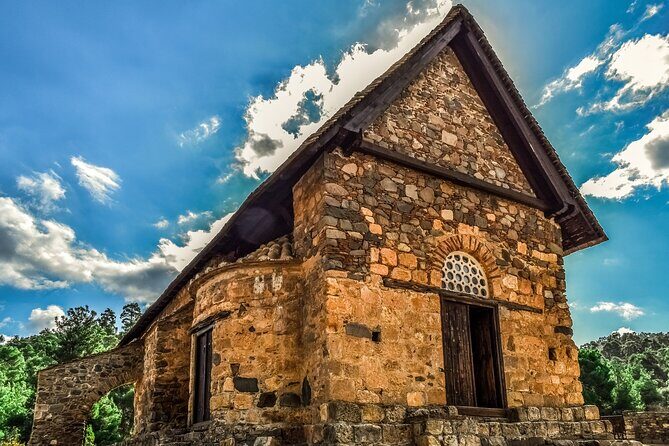
- Six UNESCO-listed church stops in an organized route, with time to actually look
- Free admission tickets at each church stop, so your money stays for food and water
- Private day with pickup and drop-off, not a crowded coach experience
- Mountain views in Kalopanayiotis area, a different side of Cyprus from the coast
- Driver storytelling without a separate professional guide, based on what past groups valued
- Family-business service feel, with good communication and practical help
Why this UNESCO Churches + Kalopanayiotis route works
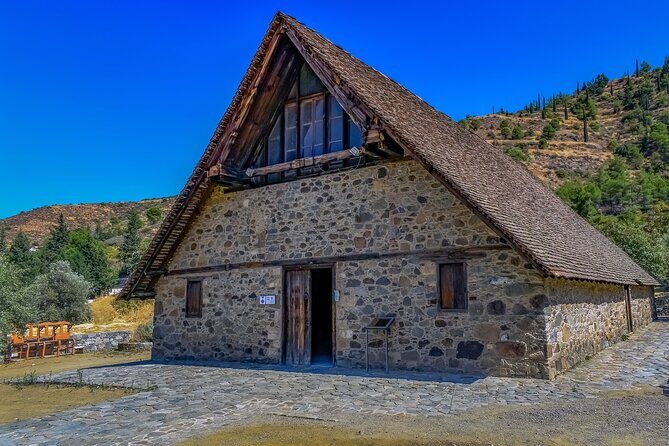
This trip is built for one thing: seeing painted churches up close, not just passing them. You start at 9:00am and spend roughly 8 to 9 hours on the move, which is long enough to feel like a real day trip but structured enough to keep you from rushing every stop.
Value-wise, the big win is that admissions at the churches listed in the route are free. That matters because these are UNESCO World Heritage sites, and on many tours you end up paying entry fees plus spending more on extras. Here, your $240.32 per person is mostly about transportation, comfort, and access to a route you might not put together yourself.
Another smart part: this is a private tour, meaning only your group is in the vehicle. That gives you flexibility if you need a restroom break, if someone wants a slower walk inside a church, or if you want to ask a couple of questions without waiting for a whole group to settle down.
The only real caution is the “45 minutes per stop” rhythm. It’s enough time to appreciate the art and the setting, but it won’t satisfy the kind of traveler who wants to read every niche and mural like a textbook. If you prefer slow travel, pick the sites you most care about and let the rest be a bonus.
A few more Larnaca tours and experiences worth a look

Your day’s route, stop by stop (and how to pace it)
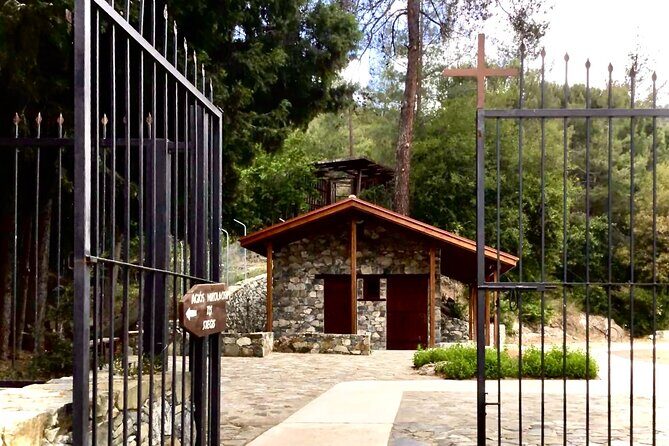
Your itinerary is a steady chain of UNESCO-listed churches across the Kalopanayiotis area and surrounding valleys. Each stop is set at about 45 minutes, which creates a helpful rhythm: look closely, step back for photos and context, then move on before the day gets heavy.
Think of it as two themes. First, you’ll tour fresco-packed churches—Panagia Asinou, Panayia Podhithou in Galata, Saint Nicholas of the Roof, Lampadistes, Panagia tou Moutoulla, and Archangelos Michael. Second, you’ll tour geography: Solea Valley and the mountainous region around Moutoulla and Pedoulas.
Because lunch is not included, you’ll want to treat eating as part of your planning. If you snack early, you’ll enjoy the whole day more. If you skip thinking about food until you’re hungry, the late afternoon can feel longer than it needs to.
Below is what each stop gives you, plus where the “worth it” feeling comes from.
Panagia Asinou: Byzantine frescos in the UNESCO spotlight
Panagia Asinou is one of those places that makes you stop talking for a minute. It’s UNESCO World Heritage-listed and known for some of the best Byzantine wall paintings on the island, spanning from the 12th to the 17th centuries. In practical terms, that means you’re not just seeing a single era of art—you’re looking at a long timeline layered through the building’s life.
The church is listed with free admission, and you get about 45 minutes. In that window, you’ll want to do two things fast: first, take in the full interior layout so the paintings make sense as a set; second, pick one or two painting zones to examine more carefully. That way, you avoid the common trap of sprinting for details and leaving with a blur.
What you’ll likely feel here is scale. These aren’t tiny “photo backdrops.” The art is integrated into the church structure, so your eyes keep getting redirected by arches, surfaces, and placement. It’s the kind of stop that turns a tour into a real looking session.
Possible drawback: if you’re traveling with someone who wants quick outdoor sights only, this one may feel more “art focused” than scenery focused. But if you like visual history, this stop is a strong anchor for the whole day.
Galata’s Podhithou church: another Virgin, another artistic flavor
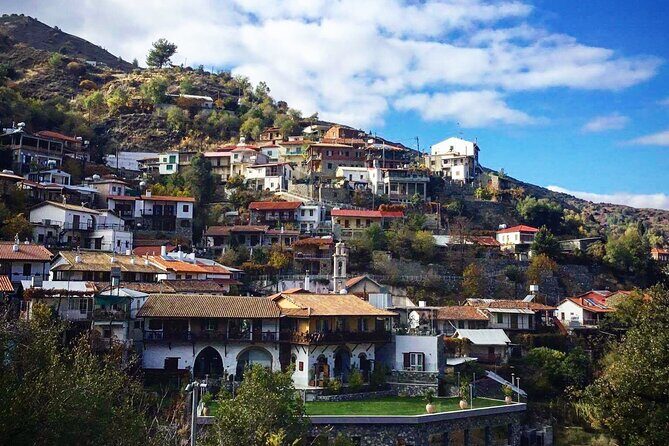
Then you’ll head to Galata village for the Church of Panayia (the Virgin) Podhithou. This one is also UNESCO-listed, and it’s another fresco-packed church stop with free admission and about 45 minutes.
I like the way Podhithou works right after Panagia Asinou. You can start noticing differences in how the painting programs are arranged and how the church’s interior reads visually. Even if you don’t know Byzantine art terminology, you can still compare the feel: where your eye goes first, what stands out, and how the space guides your attention.
A second advantage of this stop is that it gives you a village moment. You’re not only in churches; you’re moving through places where the church is part of local life. That shift helps the day from becoming a checklist.
One consideration: these churches can vary in how comfortable they are for long standing and close viewing. With only 45 minutes, it helps to bring a comfortable stance and move your attention around rather than trying to see everything at once.
Solea Valley’s Saint Nicholas of the Roof: the monastery church all-painted
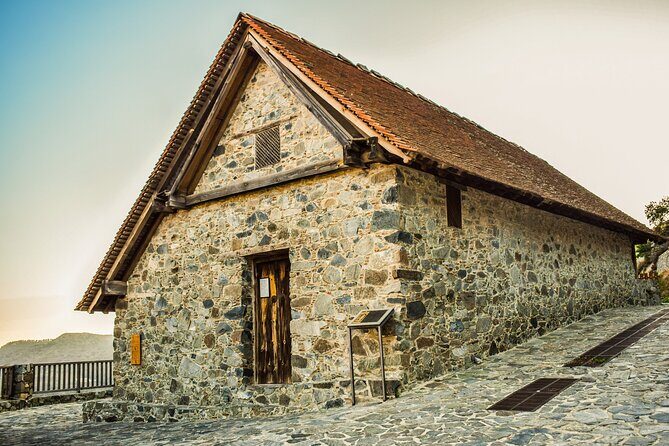
In the Solea Valley, you visit the Church of Saint Nicholas of the Roof. It’s another UNESCO World Heritage site, and it stands out for one big reason: it’s the only surviving monastery church of its kind on the island, and it’s covered entirely in wall paintings from the 11th to the 17th centuries.
That “entirely covered” detail changes how you experience the place. Instead of a few highlight scenes, you get an environment where paintings fill your periphery. It’s the kind of stop where you might feel your attention slow down naturally—there’s too much to treat casually.
The free admission and 45-minute schedule keep it practical, but you still need a smart approach. Don’t try to read every section. Pick a method: scan from one side to the other, pause for a favorite panel, then do a second pass. Two shorter looks beat one frantic one.
A potential drawback: if you’re feeling church fatigue by this point, the “wall paintings from the 11th to the 17th centuries” span can feel like information overload. If that happens, reduce your expectations to one goal: find one or two pieces you can talk about after the tour.

Lampadistes in 1731: a tomb you can literally point to
Next comes the Monastery of Saint John Lampadistes, where the church of Agios Ioannis Lampadistis was built in 1731. The draw here isn’t only the church. It’s the saint’s tomb area and the specific items connected to the saint’s story.
Your route notes that the saint’s tomb dates to the 12th century and can be found under a narrow north-eastern arch. It also mentions that the saint’s skull lies in a niche. Those are very specific physical details, and they matter because they ground the artwork and devotion in something you can locate during your visit.
In a 45-minute stop, you’ll likely spend part of your time just orienting yourself: where the tomb sits, how people approach the niche area, and how the space is arranged around those features. It’s a different kind of “history” than mosaics or fresco timelines. It’s about continuity—how the church became a vessel for both art and memory.
If you like places where the sacred objects are tied to the architecture, this stop tends to land well. If you prefer pure art viewing and would rather not focus on relic niches, you may still find it interesting, but your attention will follow a different path.
Moutoulla and Pedoulas: a tiny 13th-century chapel and a 1474 painter
The last stretch is a nice change of pace because it pairs small-scale and specific artistic authorship.
First, Panagia tou Moutoulla is in the mountainous region of Moutoulla. The chapel is tiny and from the 13th century, and it’s one of the earliest examples of its type. It’s also UNESCO World Heritage-listed. When a chapel is small, you feel the art and structure as a single unit. Instead of scanning, you tend to “take it in” as one scene.
Then you’ll visit the Church of Archangelos Michael in the picturesque village of Pedoulas. This small church was built and decorated in 1474 by a local painter named Minas, who came from the area of Marathasa. That painter detail gives this stop extra punch. You’re not only seeing a religious building—you’re seeing a named creative hand attached to a specific year.
Both of these stops have free admission and about 45 minutes. If you want to maximize the experience, make one decision early: for Panagia tou Moutoulla, focus on how the chapel’s scale shapes what you notice; for Archangelos Michael, focus on the 1474 decoration idea and the feeling of knowing a date attached to the work.
The mountainous region setting is part of why the day feels different from coastal Cyprus. In plain terms, the drive and the village environment add breathing room between churches.
What you get for the price: transportation, access, and real context
Let’s talk money honestly. At $240.32 per person for an 8 to 9 hour private day, this is not a budget bus tour. But your costs are controlled because free admission is included for the church stops listed in the route, and pickup and drop-off are included.
The vehicle is air-conditioned, which matters for Cyprus summer timing. You’ll also be in an English-speaking experience, and you’ll get a mobile ticket. Those are small items, but they reduce friction on a long day.
One point to understand up front: this experience does not include a professional tour guide. That doesn’t mean you’re left with no context. Past feedback highlights driver-guides sharing history and calling ahead to check church openings. So you’re getting guided storytelling, but it’s coming through the person driving the day, not from a separate licensed guide.
If you strongly need a deep art-history lecture and a strict museum-style approach, you might want to pair this day with a separate guided program in a town. If you want a smart, friendly day that gets you into the churches you came for, this format is a good fit.
Who this day trip is best for (and who should skip)
This tour is a great match if you:
- Care about UNESCO-listed church art more than big-city sightseeing
- Want a private, low-stress schedule with pickup
- Like mountain village scenery as a contrast to the coast
- Enjoy learning through conversation with a driver who knows local Cyprus stories
It may be less ideal if you:
- Want long sit-down time in a single church or museum-level reading
- Expect a separate professional guide to lead every detail
- Need lunch fully handled for you, since lunch is not included
If your travel style is “see a lot but actually look,” you’ll enjoy this. If your travel style is “slow down and linger,” you’ll need to accept the 45-minute rhythm.
Practical tips for a smooth 9-hour church day
A few things will help you get the most from the schedule without stressing:
Plan around food. Since lunch and snacks are not included, bring a small plan: water plus a snack you like, and keep some flexibility for buying food nearby later.
Dress for church visits and changing weather. You’ll be in mountainous areas, and the coast-to-hills shift can change comfort level. Bring layers so you can adjust when you go from sun to shaded interiors.
Use your 45 minutes well. Pick one highlight per church. That could be a fresco area, the tomb location at Lampadistes, or the painter Minas fact at Archangelos Michael.
Bring patience for transitions. The day is structured, but there’s driving time between villages. If you’re traveling with someone who hates car rides, this might feel long. The good news is the route changes scenery constantly.
If you’re thinking about timing, start at 9:00am. That early start helps you fit in all six stops without the day turning into a late scramble.
Should you book this UNESCO Churches and Kalopanayiotis tour?
I’d book it if your goal is a focused church day with free entry UNESCO stops and a private, human-paced schedule. The route makes sense, the pacing is clear, and the type of places you visit tends to feel more specific than the standard big-coach circuit.
I would hold off if you want a full guided museum experience with a separate professional guide, or if you hate the idea of spending only about 45 minutes inside each church. In that case, you may prefer fewer stops with more time, or add another guided session elsewhere.
FAQ
FAQ
What time does the tour start?
The tour starts at 9:00am.
How long is the tour?
It runs about 8 to 9 hours.
Is pickup and drop-off included?
Yes. Pickup and drop-off are included.
Do I need to buy tickets to enter the churches?
No. The itinerary lists admission tickets as free for each church stop.
Is lunch included?
No. Lunch (including breakfast, lunch, snacks, wine, and soft drinks) is not included.
Is a professional tour guide included?
No. A professional tour guide is not included.
Is this a private tour?
Yes. This is a private tour/activity, and only your group participates.
What language is the tour offered in?
The tour is offered in English.
Are there any requirements for the day to run?
The experience requires good weather. If it’s canceled due to poor weather, you’ll be offered a different date or a full refund.
Can I cancel and get a full refund?
Yes. You can cancel up to 24 hours in advance for a full refund.