REVIEW · LARNACA
Full Day Tour in Paphos: Trip To The Past
Book on Viator →Operated by iTaxi Cyprus · Bookable on Viator
Old Cyprus fits in one day.
This trip is a smart way to see Paphos-area highlights without wrangling a rental car, with door-to-door pickup from your Larnaca hotel and a private chauffeur-driven ride. Two big wins for me are the stop at the UNESCO mosaics at the House of Dionysos and the mix of medieval and ancient sites (Kolossi Castle, Kourion, then down to Tombs of the Kings). The one drawback to plan for is that it’s a long day with multiple archaeological walks under sun, and entrance fees and meals aren’t included, so you’ll want to budget and pack water.
I like that the itinerary is built for first-timers: you get fortress history up front, major classical ruins in the middle, and the most famous Paphos icons at the end. It’s also the kind of day where a great driver really matters. Names you might hear associated with this service include Chryso, Steve, Lucas, and Maria, and the common thread is pacing plus practical advice—where to look, when to take photos, and where to grab good food.
One more reality check: many stops are short—about 30 minutes each—so you’ll get highlights, not a slow museum marathon. If you want to read every sign at length, you’ll need to move a bit faster than your brain wants to.
In This Review
- Key Points You’ll Care About
- Paphos in One Day: Why This Route Works From Larnaca
- Chauffeur-Driven Private Transport: Real Value in the Door-to-Door Setup
- Kolossi Castle: A Medieval Fortress Lesson in Under an Hour
- Kourion and the Roman Stadium: Ruins With a Built-In Sense of Scale
- The Sanctuary of Apollo Hylati: Ancient Religion, Quiet Focus
- Palaepaphos and the Museum in a Lusignan Manor: Myth Meets Evidence
- Paphos Harbour Castle and Lunch: Where the Ancient Coast Meets the Medieval Port
- Kato Paphos Archaeological Park: The House of Dionysos Mosaics
- Tombs of the Kings: Underground Scale and UNESCO Status
- Aphrodite’s Rock: The Photo Stop With Real Myth Power
- Price and Logistics: Is $480.59 a Good Deal for Up to Four?
- Practical Tips for a Smooth 9-Hour Archaeology Day
- Should You Book This Paphos Trip to the Past?
- FAQ
- What is the tour duration?
- How many people is this private tour for?
- Where is the pickup included from?
- Is a professional tour guide included?
- Are entrance fees included in the price?
- Are meals included?
- What language is the tour offered in?
- What time does the tour start?
- What happens if weather is poor?
- Are service animals allowed?
Key Points You’ll Care About

- Door-to-door pickup in Larnaca saves you the stress of coordinating buses or transfers.
- Private, chauffeur-driven vehicle means you move on your schedule, not someone else’s herd pace.
- UNESCO stops are tightly grouped: Kato Paphos mosaics, Tombs of the Kings, plus other major ancient sites.
- Built-in lunch time at Paphos Harbor Castle gives you a natural break in the middle of the day.
- No entrance fees included means you should plan spending per site and bring cash or card as needed.
- A 9-hour day in the sun calls for water, shade strategy, and comfortable shoes.
Paphos in One Day: Why This Route Works From Larnaca
You’re driving from Larnaca over to the Paphos region for a full day, and the big advantage is that you don’t lose half your vacation to transportation logistics. This isn’t just “see ruins.” The order of stops is the point: you start with a fortified medieval site, then transition into classical Cyprus, then finish with Paphos’s most iconic UNESCO-listed remnants.
Think of the day like a storyline. Kolossi Castle sets the military tone. Kourion and Apollo Hylates shift you into ancient sanctuaries and Roman-era sports/entertainment spaces. Palaepaphos and Kato Paphos bring you to the heart of Aphrodite mythology and Roman luxury (hello, mosaics). Then the day ends on the dramatic cliffside vibe at Aphrodite’s Rock.
Timing-wise, you’ll usually spend about 30 minutes at many of the stops, plus longer time at the Paphos harbor area. With a day this full, your best tool is deciding what you want to catch with your eyes in the first minute or two—then let the rest of the visit be a bonus.
A few more Larnaca tours and experiences worth a look



Chauffeur-Driven Private Transport: Real Value in the Door-to-Door Setup
This is a private experience for up to four people, with air-conditioned chauffeured transport. That sounds basic until you picture the alternative: public buses across multiple archaeological sites can be time-consuming and unpredictable, especially when you’re dealing with fixed opening hours.
Pickup is included from your Larnaca hotel, and the tour runs from 9:00 am for roughly 8 to 9 hours total. Because it’s private, you can ask your driver to help you manage the short time windows at each site—where to focus, what’s easiest to photograph quickly, and where you can linger if the next stop is slow to start.
Also, the “driver/guide” role matters. In the experiences people described with this service, the best days came from drivers who took the wheel and talked you through what you were seeing from the car or while you walked. You might hear stories and explanations from guides such as Chryso, Maria, Lucas, or Steve, and that changes the day from sightseeing to understanding.
Kolossi Castle: A Medieval Fortress Lesson in Under an Hour
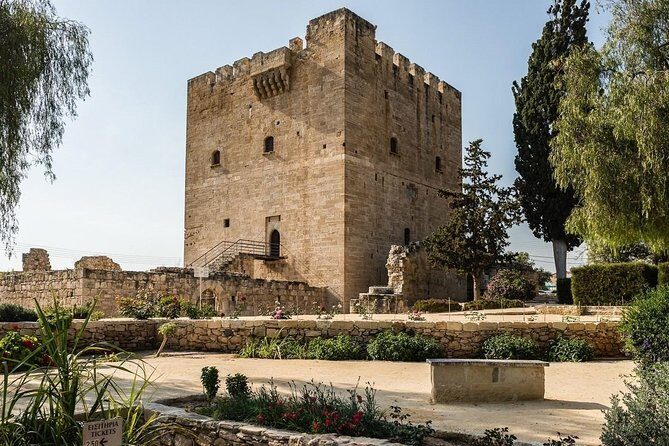
Your first stop is Kolossi Castle, a fine example of military architecture originally built in the 13th century. You get about 30 minutes here, and that’s enough time to get the idea without feeling trapped in a long queue or slow-paced museum rhythm.
What I like about starting here is that it’s a fast way to shift gears from modern Cyprus into the medieval world. You’re not only looking at stones—you’re learning how power worked on the island: fortifications, control of routes, and defense.
Practical note: with a 30-minute stop, you’ll want to do the quick scan first—courtyard, exterior views, key interior areas (if open)—then circle back if something catches your attention. Wear shoes you can trust. Even when the castle is compact, walkways can be uneven.
Kourion and the Roman Stadium: Ruins With a Built-In Sense of Scale
Next up is Kourion, including the Curium Amphitheater and then the stadium area. You’ll typically get around 30 minutes at each.
Why this section works so well is scale. Kourion’s theater and athletic stadium aren’t just “cool rocks.” They give you a mental picture of how people gathered, watched, and competed in antiquity. And the stadium details matter: it was constructed during the reign of Emperor Antoninus Pius in the 2nd century CE, designed for Hellenic pentathlon-style sports such as running, jumping, wrestling, and discus/javelin throwing.
If you’re the kind of person who likes to orient yourself before you walk, this is a good place to do it. Stand back first and look for the sightlines—where spectators would have sat and how the space funnels your attention. Then walk in closer for textures and seating rows.
One drawback: these sites can feel sun-heavy. Reviews and real-world experience point to a key theme—there’s often limited shade. So treat this as a “pace yourself” portion of the day. Take water breaks now, not later.
The Sanctuary of Apollo Hylati: Ancient Religion, Quiet Focus
After Kourion’s public spaces, you move to the Sanctuary of Apollo (Apollo Hylates). This is another 30-minute stop.
Sanctuaries are a different kind of archaeological experience than theaters or tombs. In a theater, the action is built-in. Here, the landscape and layout matter more than spectacle. You’ll notice the sense of sacred geography—how the place sits within its surroundings and how worship sites were organized.
In a day like this, the payoff is mental contrast. If the morning felt like “watch how people lived publicly,” the sanctuary is “feel how people structured meaning.” You don’t need long hours to get something from it—you just need a little attention.




Palaepaphos and the Museum in a Lusignan Manor: Myth Meets Evidence
Your next big anchor is the Archaeological Site of Palaepaphos near Kouklia Village. This is a major UNESCO-listed area and historically one of Cyprus’s most important city-kingdoms. It’s also described as the first Cypriot site included in the UNESCO World Heritage List in 1980.
You’ll get about 30 minutes here, and the centerpiece is the Sanctuary of Aphrodite. The remains date back to the 12th century BC, with the site remaining active through the 3rd–4th centuries AD. That time span is hard to picture unless someone helps you connect the dots, which is why a good driver explanation helps a lot.
A unique feature at this stop is the museum housed in a Lusignan Manor. It displays finds from the area and explains how the cult changed over time, starting from broader fertility worship and evolving into the cult of Aphrodite.
Two legends are tied to Palaepaphos’s founding in the materials provided for the experience:
- Agapenor of Tegea (on his way back from the Trojan War)
- Kinyras, linked to local legend and said to be the first high priest
Even if you don’t memorize those names, you’ll feel the point: Cyprus isn’t just Greek myth landing here as a costume. It has its own local threads woven into larger Mediterranean stories.
Paphos Harbour Castle and Lunch: Where the Ancient Coast Meets the Medieval Port
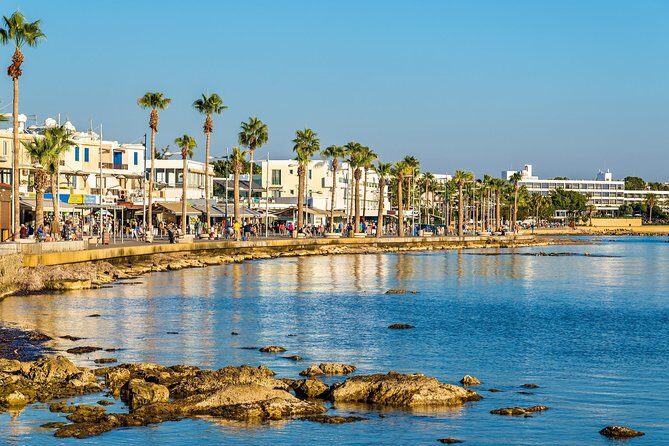
Then comes Paphos Harbour Castle, a medieval structure originally built as a Byzantine fortress to protect the port. Here you’ll typically spend about 1 hour 30 minutes, and the day includes time for lunch at a traditional restaurant.
Important budgeting note: meals are not listed as included. Still, you’ll have a planned lunch break, and the experience is designed so you’re not starving while everyone waits for the next taxi problem to solve itself. I’d treat this as part of the tour’s value: it’s not only “see ruins,” it’s “get fed like a human.”
This longer stop is also a relief valve. After a sequence of archaeological spaces, you get to stretch, look at the harbor area, and reset your energy.
Kato Paphos Archaeological Park: The House of Dionysos Mosaics
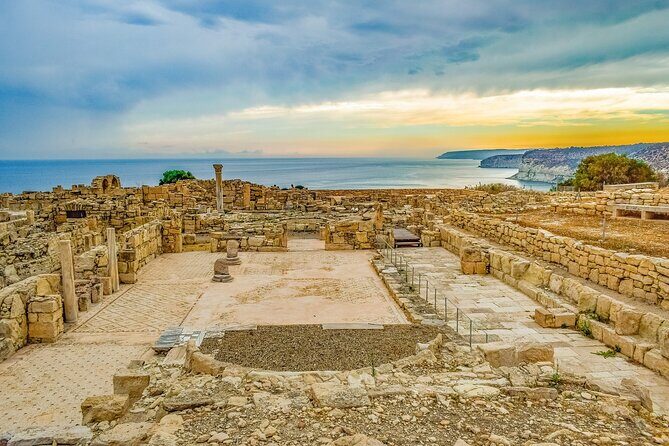
This part of the day is why a lot of people book the full itinerary. You’ll go to Kato Paphos Archaeological Park, including the House of Dionysos, a Roman-period home from the 2nd century AD.
You’ll spend about 1 hour here. The highlight is the mosaic floors—especially the entrance area that features sea pebbles and depicts the mythical sea monster Scylla. The mosaics focus on Dionysian themes: harvesting and wine-drinking scenes, plus hunting imagery.
Here’s what to do so you don’t miss the best bits in the allotted time:
- Start by standing at the entrance view and let your eyes lock onto the main mosaic story.
- Then scan for the most detailed panels rather than trying to read every figure.
- Take a slow moment for Scylla. It’s the kind of detail you’ll remember long after the rest fades.
This is also the area where a great driver can help you spot what matters quickly. Even if you’re not a history nerd, mosaics reward attention—especially when you understand they’re narrative art, not just decoration.
Tombs of the Kings: Underground Scale and UNESCO Status
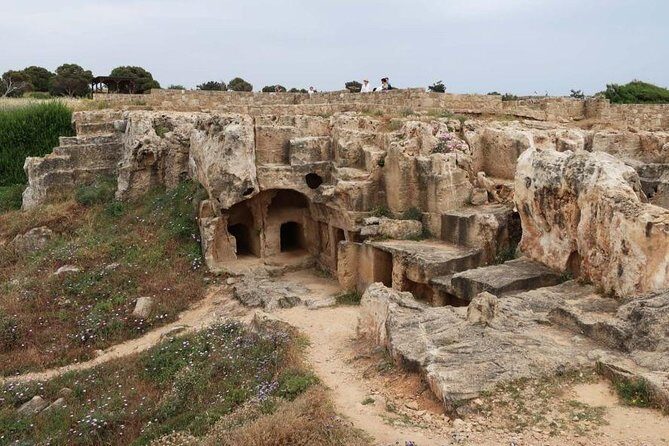
Next stop: the Tombs of the Kings, another UNESCO World Heritage Site. You get about 30 minutes.
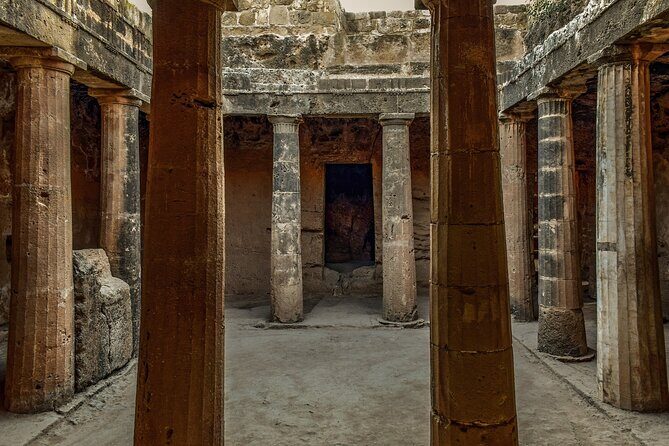
These are underground tombs and chambers where high-ranking officials and aristocracy were buried. The main experience here is contrast: the outside world is bright and noisy, and then you step into a space that feels enclosed and ceremonial. Even without a long guide walkthrough, you’ll feel the intention.
Practical note: because the stop is short, your best strategy is to move steadily, pause where the layout reveals itself, and then return for photos only once you’ve absorbed the structure. Don’t sprint. The value here is in realizing how much planning went into these spaces.
Aphrodite’s Rock: The Photo Stop With Real Myth Power
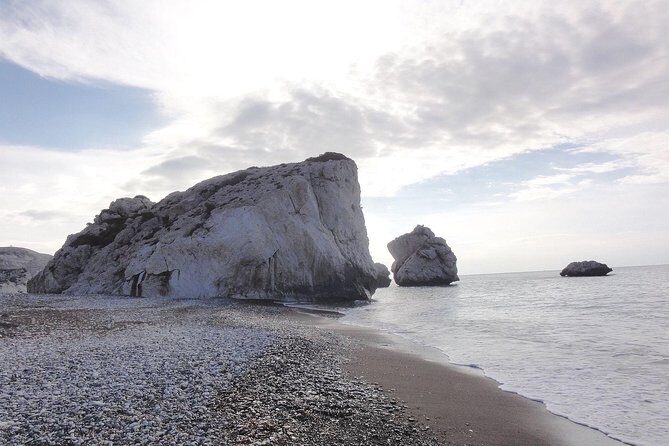
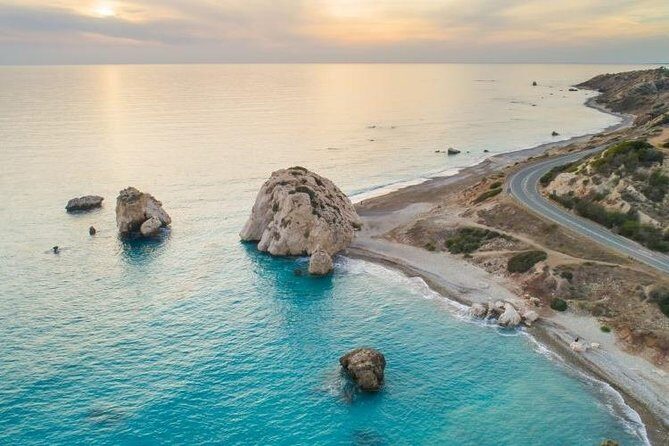
Finally, you reach Aphrodite’s Rock, about 30 minutes. It’s been regarded since ancient times as the birthplace of Aphrodite, goddess of love and fertility.
This is where the day turns more romantic and less architectural. You’ll likely want those classic views for photos—and you’ll also get a quick chance to connect the mythology you saw earlier (sanctuaries, cult history) to a physical landmark.
If you’re visiting in strong sun, come prepared. The earlier you’ve been drinking water, the easier it is to enjoy the final stop instead of feeling like you’re running on fumes.
Price and Logistics: Is $480.59 a Good Deal for Up to Four?
The price is $480.59 per group for up to 4 people. That means, in the best-case scenario (filling all seats), the effective cost is about $120 per person for a private 8–9 hour day with round-trip transfers from Larnaca, a chauffeured air-conditioned vehicle, and all the stop-to-stop driving.
The catch: entrance fees and meals are not included, and there’s no professional tour guide included in the package. In practice, that means your driver/driver guide may explain things while driving and at stops, but you should still plan on paying site entry fees separately.
So is it good value? For me, it’s strongest if:
- you’re traveling as a pair or small group and can use the full 4-seat capacity
- you want door-to-door convenience
- you don’t want the hassle of multiple ticket lines plus timing headaches
It’s weaker if you’re traveling alone and you’d rather handle driving yourself. Then you might decide to pick a smaller route or just focus on the top 1–2 UNESCO sites.
Practical Tips for a Smooth 9-Hour Archaeology Day
Here are the things that keep this day from feeling like a race:
- Bring plenty of water. Walking at Kourion, Tombs, and Paphos sites can mean sun exposure with limited shade.
- Wear comfortable walking shoes. You’ll be moving through uneven ground and stair-ish areas.
- Expect short visits. Many stops are around 30 minutes, so prioritize the part you care about most at each location.
- Plan your cash/cards for entry fees. Entrance tickets aren’t included, so budget for multiple sites.
- Use the car time well. If you get a driver like Maria, Lucas, or Chryso, ask questions during transit. That’s often where you gain the “why” behind what you see.
- If you’re picky about lunch, treat lunch time as a menu moment, not a time to rush. Paphos Harbour Castle gives you a more relaxed middle of the day.
Weather matters too. This experience requires good weather; if conditions are poor, you’ll be offered a different date or a full refund. That’s a good sign: you’re not paying for a day that gets wrecked by the elements.
Should You Book This Paphos Trip to the Past?
Book it if you want a high-effort, high-reward day with the easiest possible logistics: private transport, hotel pickup, and a route that hits major ancient Cyprus sites plus key Paphos icons. It’s especially good for first-timers who want to understand the big story arcs—medieval power, classical sanctuaries, Roman art, then Aphrodite myth made physical.
Pass or rethink if you:
- hate tight time windows and want hours at a single museum-like stop
- travel solo and don’t want to shoulder the full group price
- aren’t comfortable paying entrance fees at multiple locations
If you’re open to moving at a steady walking pace and you’ll bring water and good shoes, this is a strong way to turn one day into a real sense of place on Cyprus’s southwest coast.
FAQ
What is the tour duration?
It runs about 8 to 9 hours.
How many people is this private tour for?
It’s a private experience for up to 4 people in your group.
Where is the pickup included from?
Round-trip transfers from your Larnaca hotel are included.
Is a professional tour guide included?
No. The package lists professional tour guide not included.
Are entrance fees included in the price?
Entrance fees are not included. You’ll need to pay for site tickets.
Are meals included?
Meals and beverages are not included. Lunch time is built into the day, but you should plan to pay for what you order.
What language is the tour offered in?
It’s offered in English.
What time does the tour start?
The start time is 9:00 am.
What happens if weather is poor?
This experience requires good weather. If it’s canceled due to poor weather, you’ll be offered a different date or a full refund.
Are service animals allowed?
Yes, service animals are allowed.