REVIEW · KYRENIA
A Day Trip to Medieval FAMAGUSTA (Kyrenia, Nicosia or Famagusta )
Book on Viator →Bookable on Viator
Walled Famagusta, Salamis ruins, and a tomb. This is a private 7-hour outing that strings together two very different kinds of Cyprus: pilgrimage and politics. I particularly like the visit to the St Barnabas Monastery tomb, and the chance to walk through the Varosha ghost town area with a guide who explains what you’re seeing.
You get the big advantage of a private format: less waiting around, more real time with your driver/guide, and a pace that feels sane even when the stops are action-packed. It also runs with hassle-free hotel pickup in Kyrenia (and options depending on where you’re staying), plus tickets for the historical sites are handled for you.
One possible drawback: it’s a full day with multiple walking segments—medieval streets, ruins, and the Varosha area—so come with moderate fitness and comfortable shoes.
In This Review
- Key points before you go
- The day’s route: Kyrenia pickup, monastery first, Varosha last
- St Barnabas Monastery and Icon Museum: a tomb with a long, human story
- Salamis ruins in an hour: gymnasium, theatre, Roman baths
- Medieval Famagusta walls: walking a city shaped by Lusignans and Venetians
- Lala Mustafa Pasha Mosque: Gothic roots, Ottoman additions, still active
- Namik Kemal’s prison and museum: Venetian palace context
- Varosha ghost town: an abandoned quarter reopened
- Price and value: what $360.07 per group gets you
- Timing, tickets, and how to make the most of seven hours
- The guides: why Sirin and Surin show up in the best feedback
- Who should book this Famagusta day trip
- Should you book? My straight answer
- FAQ
- Where does the tour start and where does it end?
- Is hotel pickup included?
- How long is the day trip?
- Is this a private tour or shared with other people?
- What language is the guide?
- Are entrance tickets included?
- Is lunch included?
- What fitness level do I need?
- What is the cancellation policy?
Key points before you go
- Private, driver/guide-led pacing across several major stops, so you’re not stuck watching a group shuffle along.
- St Barnabas Monastery includes a guided look at the tomb story and the Icon Museum.
- Salamis ruins in one hour hits the highlights (gymnasium, theatre, Roman baths) without turning the day into a history lecture marathon.
- Medieval Famagusta walls and Gothic-to-Ottoman architecture, especially around Lala Mustafa Pasha Mosque.
- Namik Kemal’s prison setting in the Venetian palace context, plus the writer’s story.
- Varosha after 1974 gives you a rare, firsthand look at an abandoned quarter that later reopened.
The day’s route: Kyrenia pickup, monastery first, Varosha last
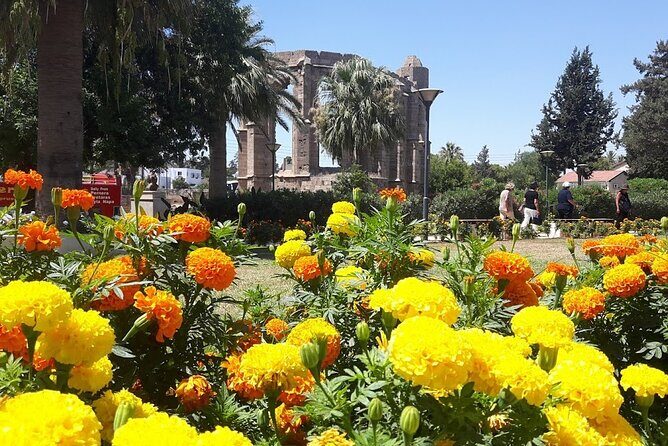
The trip is built as a morning-to-evening loop. You’re picked up in the Kyrenia area (and depending on where you’re staying, you may be picked up from Famagusta as well), then you head to the northeast for the first and most story-heavy stop: St Barnabas Monastery and the Icon Museum.
After that, the day moves in a clear sequence: Salamis ruins for ancient-world remains, then Famagusta’s walled city for medieval streets and landmark buildings, and finally Varosha for the stark contrast of an abandoned quarter. The whole thing is roughly 7 hours, and most of the time blocks are tight enough that you’ll want to pay attention rather than try to “wander forever.”
The practical win is that you get a private driver/guide to keep things moving. You’re not paying for a bus tour where you spend half your day standing around.
You can also read our reviews of more tours and experiences in Kyrenia.

St Barnabas Monastery and Icon Museum: a tomb with a long, human story
This stop is scheduled for about two hours, and it’s the heart of the spiritual side of the day. Barnabas is presented as a Jewish figure who studied in Jerusalem, then returned to Cyprus when Christianity was spreading and worked to promote the new faith. The story goes that people opposed him, he was killed, and believers buried him in a cave under a carob tree—then they were chased, with the location not known for decades.
What you actually get from the tour here is not just a quick glance. Your guide leads you through the tomb visit and the Icon Museum, and you’ll hear the context that makes these places more than “a couple of buildings you stopped at.” It’s the kind of stop where the guide’s voice changes how you look at details—signs, symbols, and the way spaces are laid out around the tomb.
If you’re the type who likes your history with a storyline attached, this is where the day earns its name. And if you’re not—this is still worth it because the time is generous compared with the other stops.
Salamis ruins in an hour: gymnasium, theatre, Roman baths
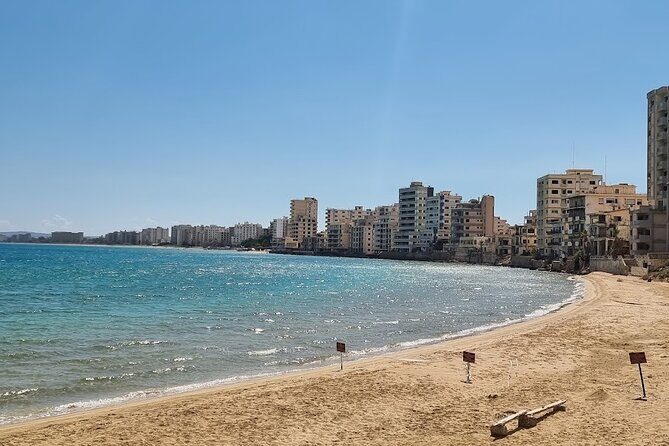
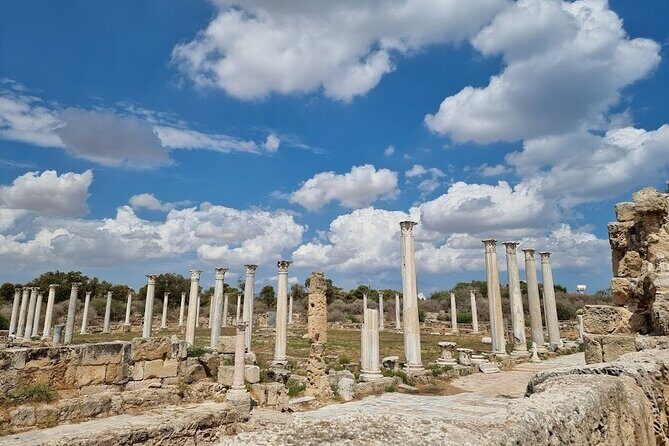
Next comes Salamis, with about one hour on the ground. You’ll be shown major highlights tied to the ancient city’s layout: the gymnasium, theatre, and Roman baths.
The tour also frames Salamis in myth-and-origin terms: the foundation story is linked to 11 BC, and the tale includes Teucer, a figure from the Trojan War cycle. Even if you don’t care about myths, the value here is that the guide helps you connect “what you see” with “why it was built that way.” In an hour, that connection matters.
One practical consideration: ruins take time for “looking slowly.” You’ll want to pick your spots and let your guide’s explanations guide where you focus, rather than trying to read every stone. Comfortable shoes help too—ruins usually mean uneven ground and lots of short steps.
Admission for Salamis is included, so you won’t have to figure out ticket lines or payment details mid-day.
Medieval Famagusta walls: walking a city shaped by Lusignans and Venetians
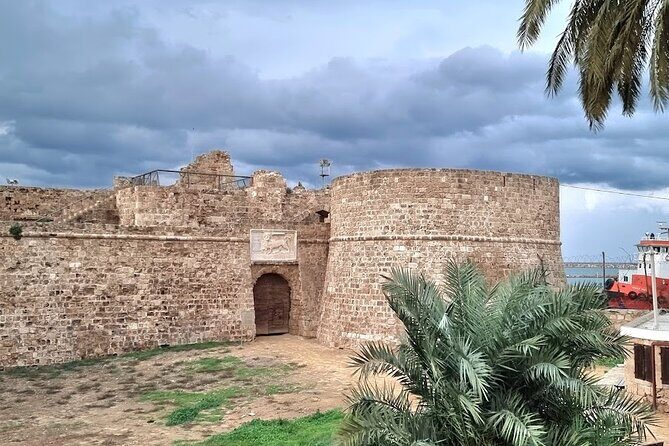
After Salamis, you transition into Famagusta’s walled old town, again for about one hour. The city’s walls are described as Lusignan-era, with later Venetian additions. That matters because you’ll notice layers—different rulers left different “solutions” in architecture and city design.
On this walk, you’re guided past major medieval and Ottoman-era landmarks, while your guide fills in the what-and-why. The goal isn’t to make you memorize dates; it’s to help you understand how the city functions as a fortified place that changed hands.
You’ll also hear about the mix of heritages that moved through Cyprus over centuries. The wall-walk feeling is the draw here: you get a sense of how a place lived when walls still mattered daily, not just in photos.
Lala Mustafa Pasha Mosque: Gothic roots, Ottoman additions, still active
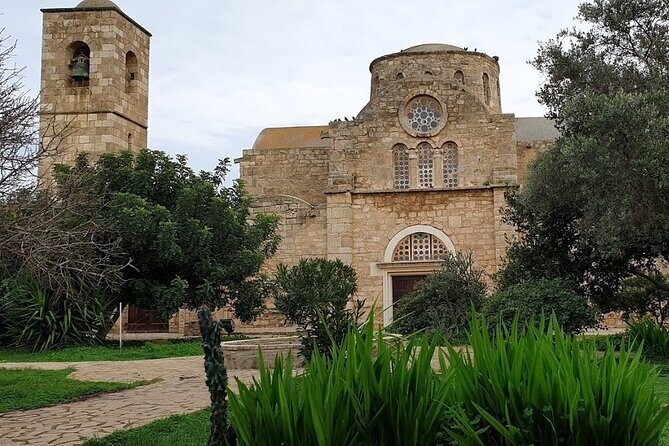
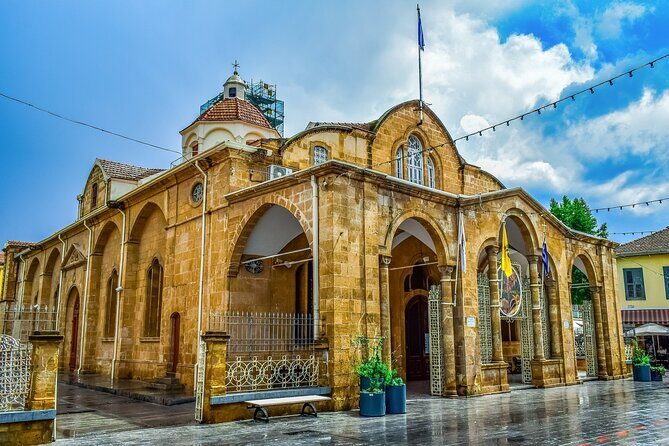
One of the most striking stops is Lala Mustafa Pasha Mosque, about one hour. The tour explains it started as a Cathedral built by the Lusignans between 1298 and 1312, originally named St. Nicholas Cathedral. It’s described as a Gothic-style building, tied to the idea of Lusignans being crowned as Kings of Jerusalem for years.
When the Ottomans took over, the structure was converted into a mosque, with a minaret added. The tour also connects earlier naming—Ayasofya—and then the later name, Lala Mustafa Pasha Mosque.
A neat detail you’ll likely hear on site: a ficus sycomorus tree planted near the architecture, dated to 1299. That kind of small anchor makes the whole building feel less abstract. And since the mosque is still used as a mosque today, you’re seeing a living layer of history, not a sealed-up museum shell.
This is also a good time to remind yourself: dress and behavior matter in places of worship. The tour doesn’t spell out dress rules, but basic respect is always the right move.
Namik Kemal’s prison and museum: Venetian palace context
Next is Namik Kemal Zindanı ve Müzesi, about one hour. This stop is all about a political figure and the setting where he was held. During the Ottoman period, the tour notes that Famagusta became a place for exile. Namik Kemal is presented as a writer who opposed the Sultan and was imprisoned in Famagusta for 38 months.
His prison is located within the Venetian palace. That’s an important detail because it connects different eras in one space—Venetian palace fabric holding an Ottoman prison story. You also get references to a statue named after him in the square, with the note that the statue was replaced in 1953.
This is a great stop for anyone who likes history that isn’t only about battles or rulers. Writers, dissent, and punishment are part of the city’s story too—and the guide helps you see the links rather than treating the prison as a random detour.
Varosha ghost town: an abandoned quarter reopened
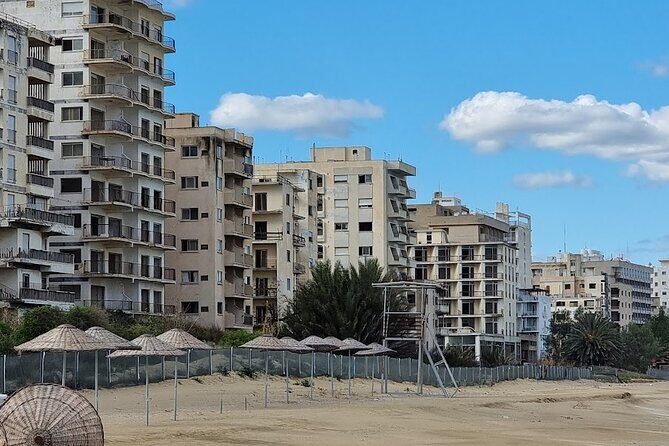
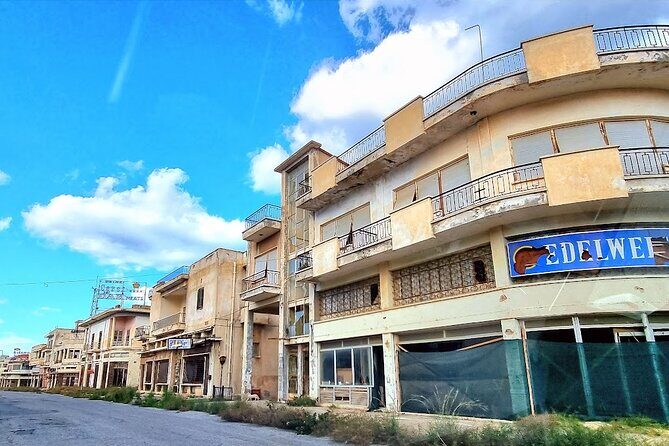
The final major site is the Ghost Town Famagusta, tied to Varosha. Expect about one hour here, and the contrast is the whole point.
The tour description frames Varosha as a once-busy tourist area with houses and hotels, active until it was abandoned in 1974. Then it notes that it later reopened 46 years after the abandonment. Walking through this area with a guide turns “abandoned” into something more physical: you see how quickly everyday places can become frozen-in-time, and you hear the context that explains why.
This stop is often the emotional peak of the day. It’s also why a private guide helps. The “what” is visible; the “so what” comes from someone explaining the broader history and architecture around it.
If you’re sensitive to bleak scenes, go prepared mentally. On the flip side, if you like place-based history that you can look at with your own eyes, this is the moment that sticks.
Price and value: what $360.07 per group gets you

At $360.07 per group (up to 4), this isn’t a bargain-basement price—but it also isn’t priced like a luxury-only experience. The value comes from the combo:
- Private tour with a driver/guide
- Fuel surcharge and bottled water
- Hotel pickup and drop-off depending on your starting location (selected hotels)
- Tickets for historical sites (you’re not hunting down admissions mid-day)
In practical terms, you’re paying for time plus local explanation. With a small group of up to four, you’re not dealing with a crowd. That matters on a day where the itinerary moves from monastery to ruins to multiple city landmarks.
Also, the tour is capped to about 7 hours, which helps you see a lot without dragging the schedule into an all-day slog.
Lunch is not included, so you’ll likely want to plan for a stop on your own schedule (or ask your guide where to eat, since locals and guides often have solid suggestions).
Timing, tickets, and how to make the most of seven hours
The tour window includes a morning start. Pickup is listed between 9:30 AM and 10:00 AM (Monday through Sunday). Confirmation is received at booking, and you’ll get a mobile ticket.
Because most stops are about an hour (and one is two hours), don’t expect long free time. Your best move is to treat this like a guided “route for your eyes.” When the guide points something out—an architectural change, a named area, an origin story—pause and take it in. That’s how the day becomes more than a checklist.
A few practical tips for comfort:
- Bring comfortable walking shoes for ruins and city streets.
- Have water handy, even though bottled water is included.
- If you’re visiting in warm months, plan for sun—your day has open-air walking time.
The guides: why Sirin and Surin show up in the best feedback
The standout theme in the feedback is the guide’s ability to make the day flow and make the stories stick. Recent guidance is associated with names like Sirin and Surin, and the praise is consistent: strong Cyprus history explanations, a fun energy, and a pace that feels personal.
That matters because this itinerary has a mix of religious history, ancient ruins, medieval architecture, and political memory. A good guide ties those threads together so you’re not bouncing between unrelated stops.
And if you’re curious about lunch, one of the nice touches described in feedback is that guides may point you to a local restaurant option. Since lunch isn’t included in the tour price, keep it flexible and ask once you’re with your guide.
Who should book this Famagusta day trip
This works especially well if you:
- Want a private day plan with clear stops and minimal stress
- Like historic layers—ancient, medieval, Ottoman—and want them explained in context
- Want the emotional contrast of Varosha plus major sights like Salamis and the medieval core of Famagusta
- Prefer a small group (up to four) so your questions don’t get lost
It may not be ideal if you hate walking, rush through photos, or dislike a tightly timed route. With only about an hour per stop (except Barnabas), the experience is structured. That’s the point, but it’s not for everyone.
Should you book? My straight answer
Yes, if you want one guided day that combines the monastery tomb story, Salamis highlights, medieval Famagusta sights, and a look at Varosha’s ghost-town reality. The tour’s strongest value is private attention paired with tickets handled for you, so you can focus on the places rather than logistics.
I’d skip it only if you can’t handle a full day of walking or you’d rather explore at a slow, independent pace. In that case, a self-guided approach might suit you better.
FAQ
Where does the tour start and where does it end?
The tour start is listed at Bella View Art Boutique Hotel (Zafer Cad. No: 2 Topkapı Sok, Ozankoy 9514 Cyprus). It ends back at the meeting point.
Is hotel pickup included?
Pickup is offered from centrally located hotels in Kyrenia, and hotel pickup and drop-off are included from selected hotels from Kyrenia or Famagusta. If you’re from other cities, there may be an extra cost.
How long is the day trip?
The duration is about 7 hours.
Is this a private tour or shared with other people?
It’s a private tour/activity, and only your group participates.
What language is the guide?
The tour is offered in English.
Are entrance tickets included?
Yes. Tickets for historical sites are included. (Some stops note free admission, but the tour includes tickets where admission is required.)
Is lunch included?
Lunch is not included.
What fitness level do I need?
The tour notes a traveler should have a moderate physical fitness level.
What is the cancellation policy?
This experience is non-refundable and cannot be changed for any reason.